

Evidence Over Hype: AI in Software Engineering
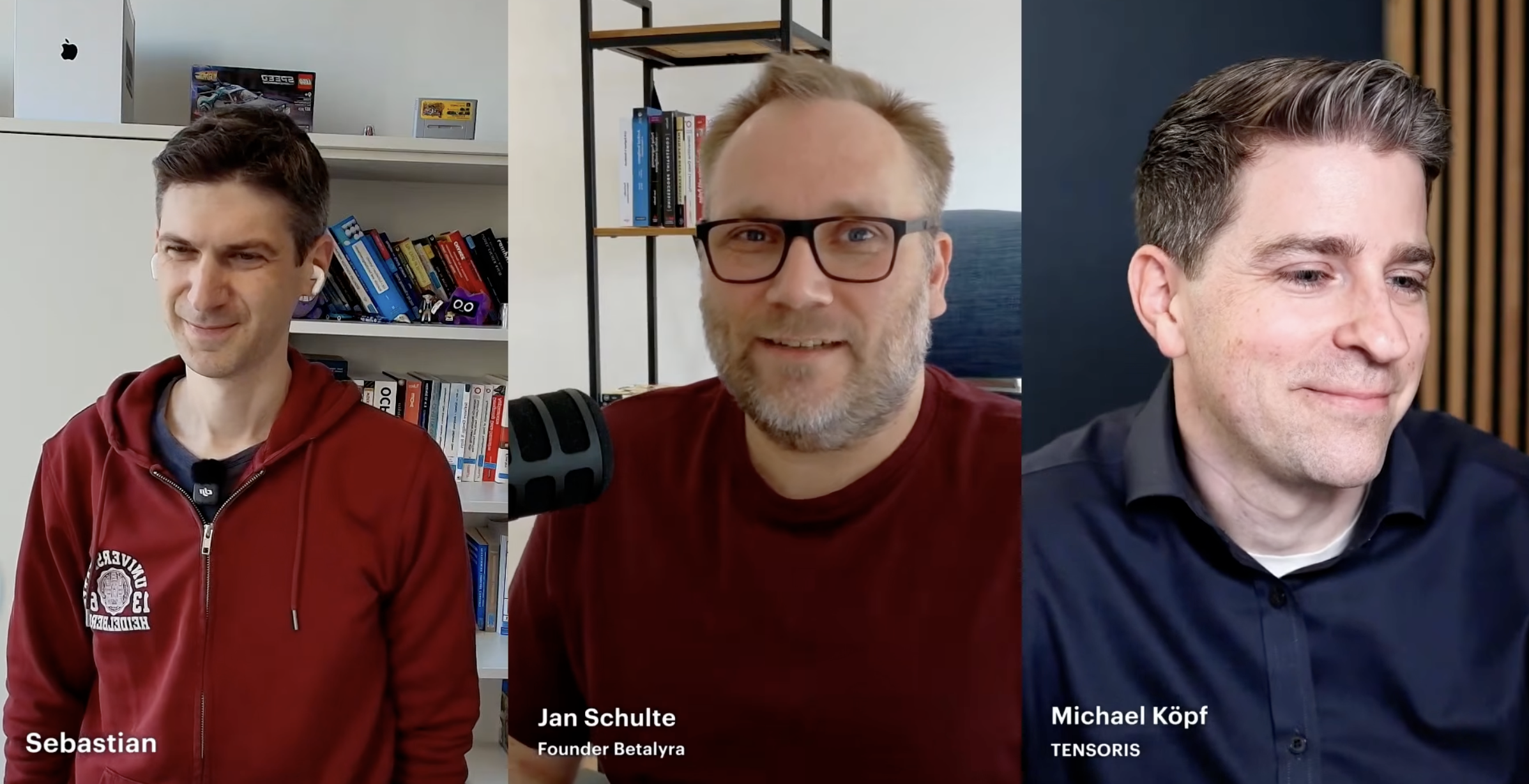

I joined Jan and Michael for episode 11 of the Token-Therapie podcast, “Evidenz statt Hype: KI in der Softwareentwicklung.” In our conversation (in German), we discussed what we know about AI in software engineering, what remains unclear, and how this affects the way we teach software engineering.
We discussed why automating code generation does not mean that software engineering is solved. AI tools can automate programming tasks that previously required considerable effort. However, software engineering also involves deciding what to build, validating whether it meets users’ needs, and maintaining software systems over time. Coding benchmarks often start from a predefined issue in an open-source project, so they assess only part of that work. To evaluate AI tools more broadly, we also need evidence about whether developers deliver features that solve customers’ problems and software that is easier to maintain.
One example we discussed was productivity. More merged pull requests can come with more builds, more failures, and more work investigating those failures. Counting merged pull requests without accounting for that additional work gives an incomplete picture. As I argued in my post about the METR study, the overhead of using AI tools deserves more attention. For companies, I would start by listening to their own developers and investigating where the tools help or create additional work. Adapting the methods of published studies evaluating AI tools in software development may be more useful for that purpose than transferring their results directly to the context of a particular company.
AI slop can look convincing while lacking substance, and AI makes it easy to produce and distribute such content at scale. Generating a plausible code contribution to an open-source project is cheap, while reviewing the contribution can take considerable effort. We discuss this burden on reviewers in our CACM article, AI Slop and the Software Commons. The same imbalance arises with student submissions and research papers. However, I also see opportunities to use AI when reviewing research papers, for example to check whether the results reported in a paper are consistent with the data used in its analyses or whether a cited paper supports a claim.
In my software engineering courses, I want students to use AI tools and understand enough to assess their output. They need to be able to explain requirements, reason about architecture, and read the code that an agentic coding tool produces. I do not have a settled answer to how much code students should still write by hand to develop that ability. That balance deserves more attention in our software engineering courses, alongside giving students opportunities to reflect on their own experience using AI tools.
We ended the podcast episode with advice for students considering a degree in computer science: Recognize the usefulness of AI tools while questioning the hype around them. I would encourage them to examine the evidence behind claims about AI, including claims that studying computer science is no longer worthwhile. Learning to think algorithmically can help students reason about problems beyond programming, even as the tools and job market change. Software engineering is changing, but I still see it as a field worth studying and a career worth pursuing.